Focused repair
A sound roof, one damaged spot
A loose flashing edge, torn shingle or failed vent boot can be addressed locally when the surrounding roof is intact and flexible enough to work with.
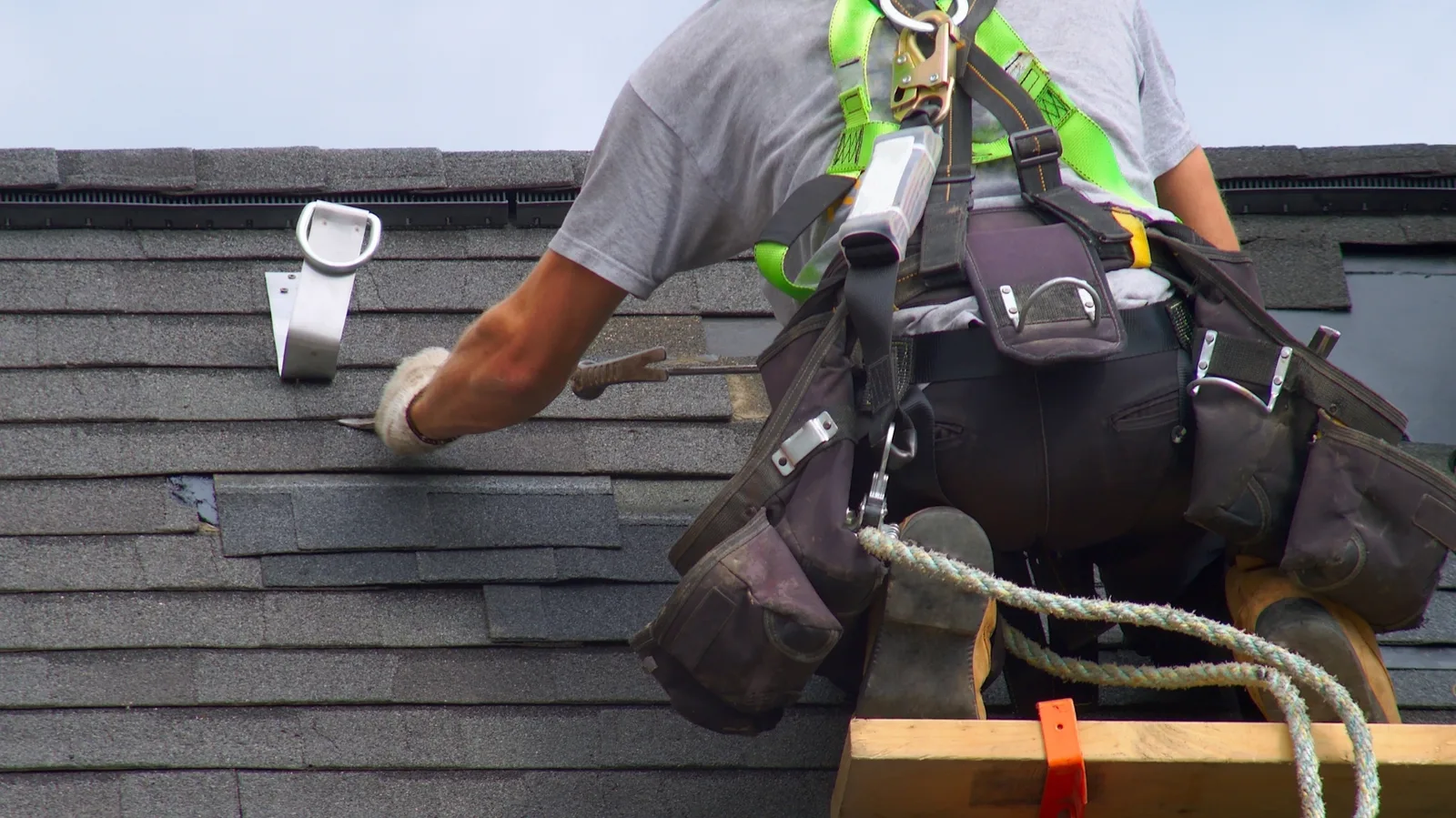
Seagoville Roofing Group
A leak doesn’t automatically mean you need a new roof. Roof repair in Seagoville starts with finding the opening, checking the material around it and working out how to keep the next rain outside.
Water can run down a rafter or along the roof deck before it reaches the ceiling. The stain over the hallway may begin at a pipe opening farther up the slope. Sealing the shingles directly above the stain can leave the real entry point untouched.
The inspection follows that path back toward the roofing. A split vent boot, an open flashing joint and a damaged shingle each need a different repair. The goal is to close the entry point and connect the repair to roofing that can still do its job.
Focused repair
A loose flashing edge, torn shingle or failed vent boot can be addressed locally when the surrounding roof is intact and flexible enough to work with.
Larger section
If opening the damaged area reveals brittle shingles or wet decking beyond it, the repair needs to reach farther. Reworking a section can make more sense than another small patch.
Replacement discussion
When the roof is deteriorating in many places, new repairs keep meeting weak material. Roof replacement becomes a useful option to discuss alongside the repair cost.
A free inspection starts with the leak and the material around it.
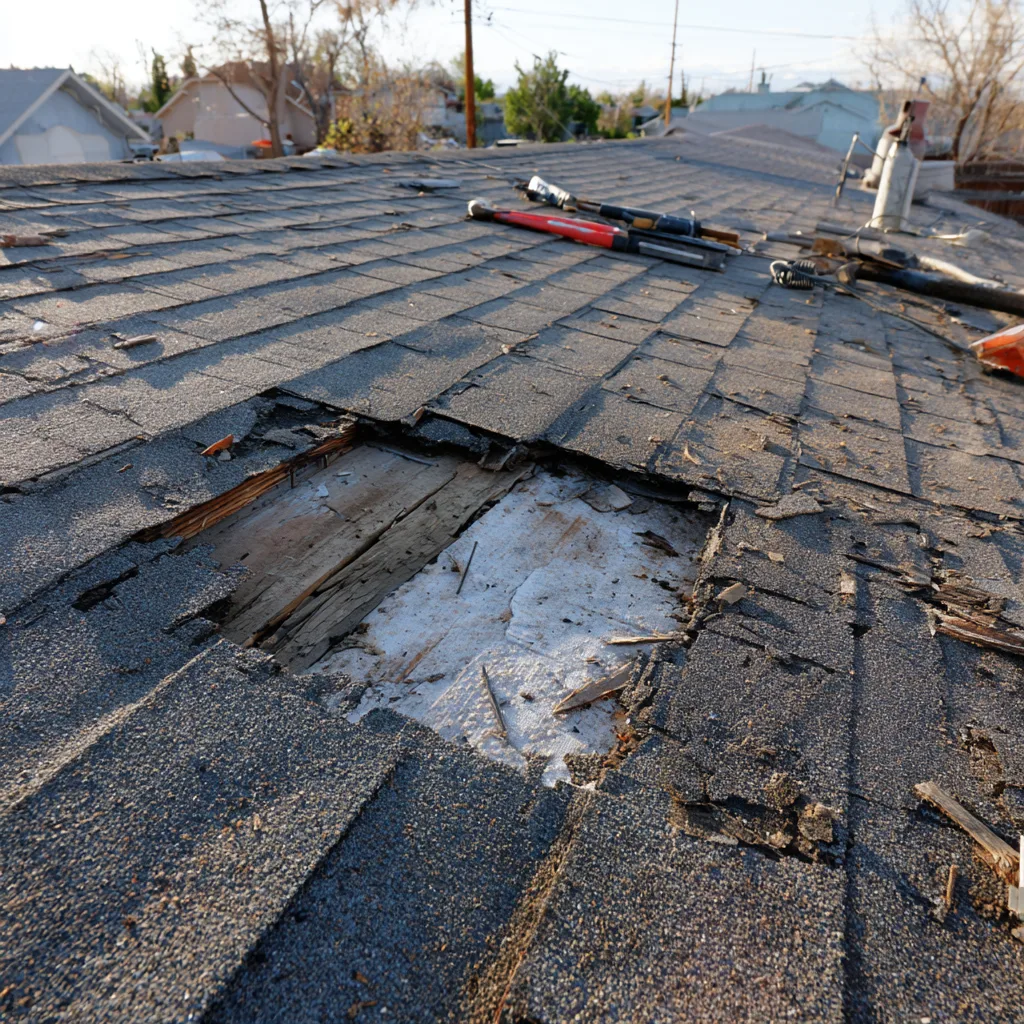
Damaged shingles have to come out without breaking the neighboring courses. Replacement pieces need the proper overlap, fastening and seal, not just a layer of cement over the face.
Metal flashing directs runoff around an interruption in the roof. Open joints, displaced metal or a poor connection into the wall can let rain behind it. The repair restores that water-shedding path.
The collar around a pipe can split while the surrounding shingles still have useful life. Replacing that failed detail is different from replacing a whole roof.
Roofing needs a firm base. Soft or rotted wood exposed during repair changes the scope because fastening new material over it leaves a weak spot underneath.
Start from the indoor symptom and inspect the roof details that could feed it.
Open enough roofing to see the failure and the condition around it.
Repair the substrate and fit compatible flashing, underlayment and roofing.
The finished repair needs to direct water onto the roof surface and toward drainage.
Move people and belongings away from the wet area if you can do so safely. Keep clear of a sagging ceiling or water near electrical fixtures, and stay off the roof. Describe the active leak in your request so the immediate protection need is clear.
The failed detail, how much roofing has to be opened, access and any damaged decking affect the price. A small vent repair and a large wet roof section are different projects. The roof cost guide also explains when a replacement budget becomes useful.
There isn’t a useful universal percentage that diagnoses your roof. Repairability depends on the roofing system, the surrounding material and the applicable project requirements. A roofer needs to see where sound roofing begins.
An exact visual match is not always available. Weathering changes color, and older products can be discontinued. Weatherproof performance and how the repaired area will look are both part of choosing the work.
Start with a free inspection
Tell us which room is leaking or what damage you’ve noticed. A free inspection helps put the repair where it belongs.