Roof repair or replacement: what changes the answer?
The answer depends less on one roof age or a fixed percentage than on what can still be repaired properly. The damaged area, the neighboring material and the layers underneath need to be considered together.
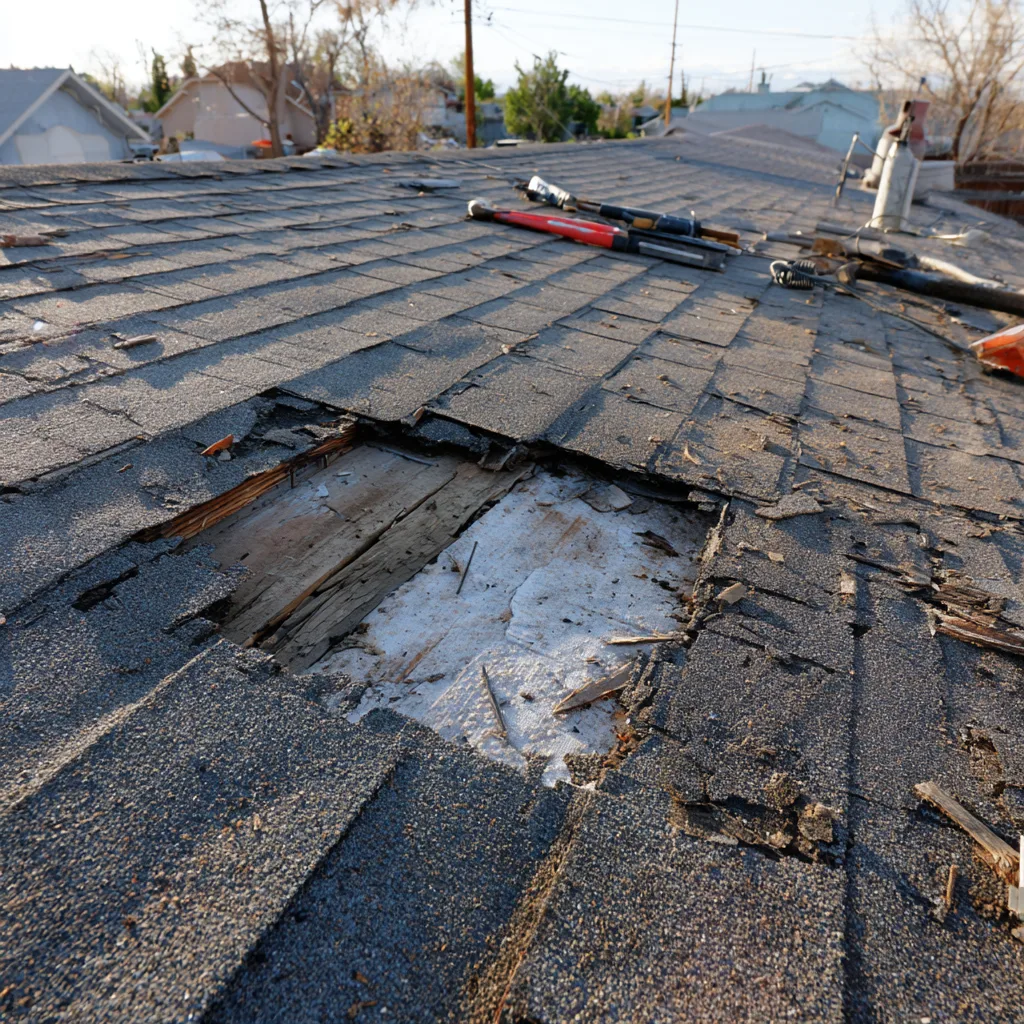
Three roof conditions, three different decisions
A failed detail on a sound roof
A split pipe collar or damaged shingle can remain a focused repair when it can be replaced and connected to intact roofing.
A section with connected problems
Several failures along a valley or slope may need one larger repair that reaches sound material. Separate small patches can leave weak connections between them.
Widespread deterioration
When new repairs keep meeting brittle roofing, wet layers or loose attachment, a full replacement may give the work a more reliable starting point.
The repair needs a sound place to stop
A repair involves opening and joining material. On an asphalt roof, neighboring shingles have to tolerate that work. On a membrane roof, the prepared surface needs to accept a compatible seam or patch. If the material around the defect is failing, the scope has to reach farther.
The same principle applies below the surface. Soft decking or wet insulation changes what needs to be removed and repaired. A small visible opening can therefore lead to a larger scope, while a dramatic indoor stain may still come from one repairable detail.
A repair that fails again needs a new diagnosis
A second leak in the same room does not automatically mean the entire roof has worn out. Water may still be entering through the original missed opening. A flashing repair can also reopen if movement keeps pulling the joint apart or if the patch cannot bond to the material beneath it.
The useful distinction is between one unresolved cause and several independent failures. One bad connection on otherwise serviceable roofing may still be repairable. Openings appearing across different slopes, with brittle shingles between them, point toward a broader condition. That is why the location and the material around each failure matter together.
Cost matters alongside the roof’s condition
Look at what the repair buys
A repair is useful when it restores a defined problem on roofing that can continue to function. Paying less for a patch that cannot hold to the existing material is a different proposition.
Consider repeated work
Several unrelated repairs on a deteriorating roof can add up without addressing the wider condition. Repeated trouble in one spot can instead signal a diagnosis or detail that needs to be corrected.
Compare real scopes
The roof cost guide offers regional replacement budgets, but a repair needs its own scope. A universal repair-to-replacement price ratio cannot establish what your roof needs.
Let condition set the next step
There is no single age or damage percentage that answers every roof question. An inspection can identify where sound material begins and whether keeping it makes sense.
What replacing the roof changes
Removal creates access to the wood and connections that a small repair leaves covered. Damaged decking can be corrected, flashing can be rebuilt into the new covering, and the edge, ridge and ventilation details can be considered together. Those opportunities matter when trouble extends beyond one repairable spot.
They also explain why a replacement is a larger project. Delivery, tear-off, protection around the house and debris removal have to be planned along with the new roofing. The decision is whether that work addresses a condition that patching cannot reasonably resolve, not whether the roof has reached an arbitrary birthday.
Find the sensible next step for your roof
Start with a free inspection to discuss roof repair and, if the condition calls for it, roof replacement. The goal is work that fits the roof you have.